We got VIP treatment as a local business – all queries were answered professionally and the work itself was fast and clean – no mess left on site. A refreshing attitude! Thanks to the team!
ABO Artisan Bread Organic – Whitstable
Cleanair UK provides fire door inspections and remedial works for commercial, industrial and residential buildings throughout the UK. With regional teams based in Kent and Birmingham, our qualified inspectors help responsible persons meet their legal fire safety duties — identifying failing doors before they become a liability, and putting them right.
A fire door only works as intended if every part of the assembly is correct — the leaf, frame, seals, glazing, hinges and self-closing device all have to perform together. A door that looks fine but doesn’t close fully, or has a degraded intumescent strip, offers little more protection than an ordinary internal door in the event of a fire. Cleanair UK’s inspections catch these failures early, with clear remedial action to bring every door back into compliance.
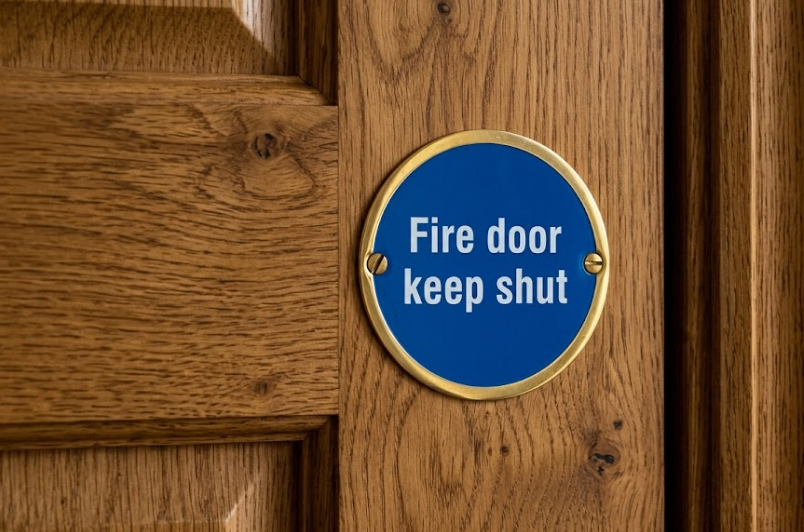
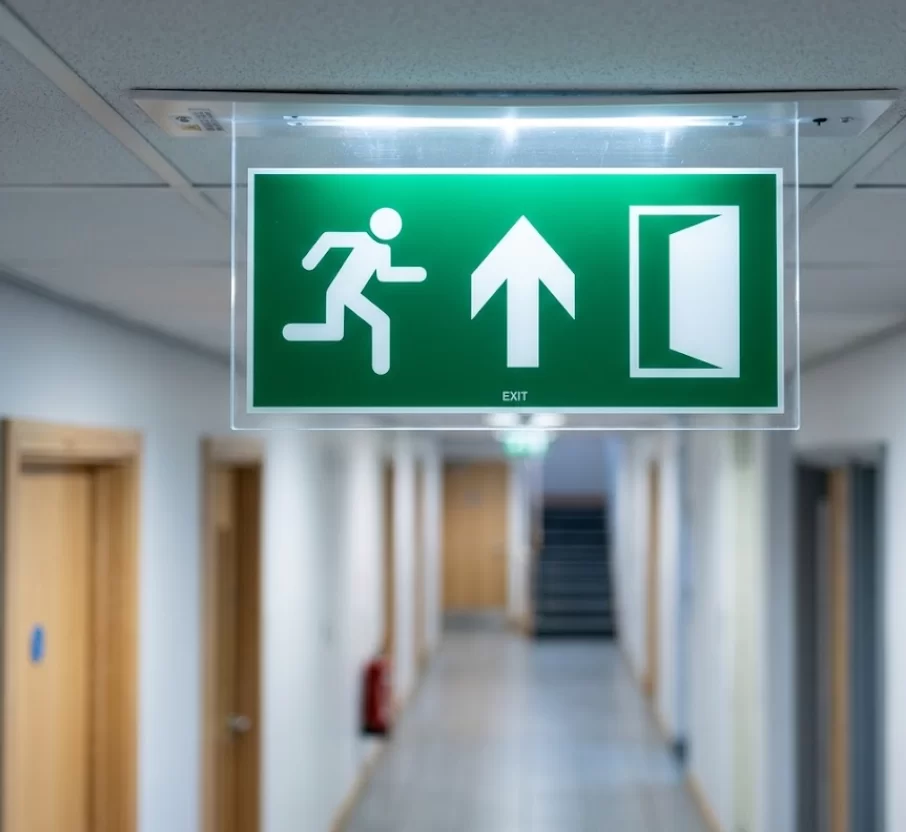
Fire door maintenance isn’t an optional extra — it’s a specific statutory duty and part of wider legal obligations for anyone responsible for a building in England and Wales, and UK regulations require responsible persons to maintain a suitable inspection regime as part of the building’s fire safety.
Fire doors are consistently one of the most common failure points identified during fire and rescue authority inspections. They protect escape routes, act as critical compartmentation barriers that slow the spread of fire and smoke, and give occupants vital time to evacuate. In 2021, 75% of fire doors failed to meet required standards. Where doors are found to be faulty, wedged open, missing intumescent strips, or fitted with the wrong hardware, the responsible person can face enforcement notices, invalidated insurance, and — in the most serious cases — prosecution following a fire.
Cleanair UK are not solicitors, and this page is intended as general guidance only. Building owners should seek their own legal advice on their specific compliance obligations.
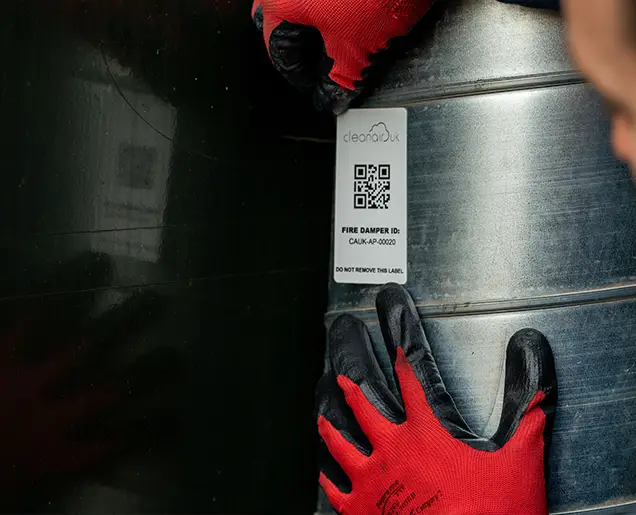
Cleanair UK’s certified fire door inspectors inspect fire doors through detailed checks against BS 8214 and the requirements of the Fire Safety (England) Regulations 2022, not just basic visual checks, including:
Checking for damage, warping, delamination or unauthorised alterations that could compromise fire performance and identifying defects that affect the building’s fire safety.
Confirming the gaps between leaf and frame, and beneath the door, fall within correct tolerances; gaps between the door and frame must not exceed 4mm, as excessive gaps are a failure point that allow smoke and fire to spread.
Checking intumescent seals for damage, paint contamination, wear or missing sections, with wear checks required every 3 months where applicable.
Confirming fire-rated glazing is correctly fitted, undamaged, and compliant with safety specifications.
Testing hinges, latches, and closers to confirm the door closes fully and latches every time, unaided; at least three CE marked hinges must be correctly installed without floor rubbing.
Verifying door identification and rating labels (e.g., FD30, FD30S, FD60, FD60S to BS EN 1634-1) along with a photographic, door-by-door record and asset register referencing.
Where an inspection identifies a failing door, Cleanair UK carries out remedial works directly — from adjusting or replacing closers, hinges and seals, through to full leaf or frame replacement where damage is beyond repair. All remedial works are carried out to BS 8214 and fully documented, so every corrected door is certified and traceable.

Every fire door inspection and remedial action carried out by Cleanair UK is recorded through Aurora, our dedicated passive fire compliance software.
Each door is uniquely referenced, with a full inspection history, photographic evidence and certification generated in real time as our engineers complete their work on site. Your compliance status is visible at any time through our 24/7 client portal — giving you clear, audit-ready records without waiting on paperwork.
Cleanair UK carries out fire door inspections and remedial works for commercial properties and other non-domestic premises:
Yes. Under the Regulatory Reform (Fire Safety) Order 2005, the responsible person must keep fire doors in efficient working order. For multi-occupied residential buildings with a storey over 11 metres, the Fire Safety (England) Regulations 2022 additionally require quarterly checks of communal fire doors and annual checks of flat entrance doors. These duties are also reinforced by government guidance and Approved Document B where relevant to the building type.
BS 8214 recommends six-monthly professional inspections as good practice, though frequency should ultimately be set by your fire risk assessment, building type and door usage. Higher-risk buildings covered by the FSER 2022 have a statutory quarterly minimum for communal doors. If you are also budgeting, the cost of a fire door survey will depend on factors such as site size and complexity.
Basic visual checks — confirming a door closes properly and shows no obvious damage — can be carried out by trained staff. A full inspection against BS 8214, however, should be carried out by a competent person and by certified specialists, not just staff handling routine checks. Certified fire door inspectors should complete recognised training courses and may hold third-party certifications such as FIRAS or BM TRADA under a fire door inspection scheme.
Any door found to be non-compliant should be remedied without delay. Cleanair UK can carry out repairs or replacement as part of the same visit wherever possible, and provides full certification once the work is complete.
Yes. Every inspection produces a full report with door-by-door referencing and pass/fail status, recorded in real time through our Aurora platform and accessible via your 24/7 client portal.
Yes. Our two regional offices support a nationwide service across the UK.
Cleanair UK helps building owners across the UK meet their fire door compliance obligations with reliable, fully documented inspections and remedial works.
We got VIP treatment as a local business – all queries were answered professionally and the work itself was fast and clean – no mess left on site. A refreshing attitude! Thanks to the team!
Have used Cleanair before to do our kitchen deep clean and were very impressed with their work so asked them to replace our duct for the kitchen extraction. Arrived on time, done the work quickly and efficiently which allowed our kitchen team to carry on with their prep work. I highly recommend them.
Looking for companies for the cleaning and servicing of my kitchen canopy and ducts I found, via Google, overpriced local traders. I am so glad I looked on the BESA website and came across Clean Air Ltd. The lads you sent round were polite and did a good job. I was so confident in your pricing and work I recommended Clean Air to my church for their kitchen work. God Bless you all.
A huge thank you to the staff at CleanAir UK who have done the most fantastic job cleaning our kitchen this year. They were prompt, polite, helpful, friendly and amazingly efficient. The kitchen is sparkling and we are thrilled with the results. We will definitely be asking them back next year…